Parked and Powerful: The Hidden Decision Window Hiding in Plain Sight
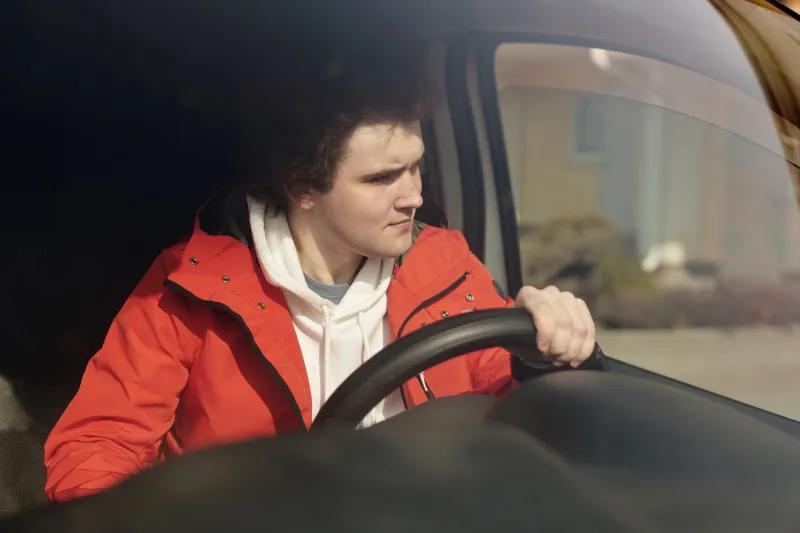
You pull into the parking lot. You find your spot. You put it in park.
And then — if you're like most people — you immediately grab your phone, check your texts, scan your email, and hustle inside like the building is going to leave without you.
But here's the thing: that quiet little pocket of time between turning off the engine and opening the car door? That's not dead time. That's prime time. And most of us are burning it without even realizing it.
The Science of the In-Between
Psychologists have long studied what they call "transition moments" — those brief, liminal stretches between one environment and the next. Turns out, these micro-transitions are neurologically significant. When your brain is leaving one context (say, the highway) and hasn't yet fully entered another (your office, your kitchen), it enters a kind of open, receptive state.
Think of it like a browser with no active tabs. For just a moment, you have processing power available that isn't being pulled in twelve directions.
Research on prospective memory — your brain's ability to plan future actions — suggests that transitions are actually optimal moments for intention-setting. Your mind is naturally doing a soft reboot. The question is whether you let it finish, or you interrupt it with a notification before it gets the chance.
Your parked car, weirdly enough, is one of the last truly quiet containers in a modern American professional's day. No colleagues. No family. No Slack pings. Just you, the faint hum of a cooling engine, and a few minutes of actual cognitive breathing room.
Why Your Car Is Different From Every Other Space
This isn't just about being alone. Plenty of people are technically alone in a bathroom stall or a conference room and still feel completely wired and reactive.
What makes the parked car unique is its combination of factors.
First, there's physical enclosure. The car creates a defined, bounded space — a kind of psychological container. Studies on environmental psychology show that enclosed spaces with low stimulation help reduce cortisol levels and support reflective thinking. The car isn't a couch (too passive) or a desk (too task-oriented). It's neutral ground.
Second, there's the absence of social performance. At work, you're on. At home, you're often needed. In your car, you're nobody's anything for a minute. That removal of social expectation is genuinely rare — and it lets your prefrontal cortex do its job without the emotional overhead of being perceived.
Third, there's mild sensory familiarity. Your car smells the same, feels the same, looks the same every time. That consistency is actually calming to your nervous system. It signals safety, which is exactly the neurological condition your brain needs to do higher-order thinking.
The Emotional Reset You Didn't Know You Needed
Here's where it gets really practical.
If you've ever snapped at your kids the second you walked in the door after a brutal workday, or showed up to a morning meeting still mentally processing last night's argument with your partner — you already know what it feels like when transitions go wrong.
What you probably didn't know is that a few intentional minutes in your parked car can measurably change that outcome.
Emotional carryover — the psychological residue from one environment bleeding into the next — is a real and well-documented phenomenon. Therapists call it "emotional contagion" when it spreads to others. But before it spreads, it lives in you. And the window to interrupt it is narrow.
Sitting in your parked car and consciously naming what you're bringing in with you — stress, excitement, frustration, distraction — is a form of what researchers call "affect labeling." And affect labeling, even when done silently, has been shown to reduce the intensity of emotional states by activating the prefrontal cortex and quieting the amygdala. In plain terms: naming the feeling turns down its volume.
You don't need a meditation app for this. You just need to sit there for a second and actually check in with yourself.
Three Ways to Actually Use This Window
So what does a useful parked-car pause actually look like? You don't have to make it complicated. In fact, the simpler the better.
The One-Question Reset. Before you step out, ask yourself one question: What's the most important thing about the next two hours? Not a full to-do list. Just one anchor. This activates goal-directed attention and helps your brain filter out noise the moment you walk through the door.
The Emotional Inventory. Take thirty seconds — seriously, just thirty — and notice what you're feeling. Not what you should be feeling. What you actually are. Tired? Anxious? Weirdly pumped? Acknowledging it doesn't make it worse. It makes it smaller. And smaller emotions are easier to manage when you're sitting across from your boss or your seven-year-old.
The Intentional Transition Statement. This one sounds almost too simple, but it works. Before you open the door, say — out loud or in your head — something like: I'm leaving work behind and walking into home. Or the reverse. That explicit verbal boundary tells your brain it's okay to shift modes. It sounds like a small thing. The research says otherwise.
Stop Treating It Like Wasted Time
American hustle culture has done a number on our relationship with stillness. We've been trained to treat any unscheduled moment as inefficiency. Empty time is wasted time. So we fill it — with podcasts, with emails, with scrolling — even when our brains are desperately trying to do something useful in the background.
But the parked car doesn't need to be filled. It needs to be used. And using it looks a lot like doing nothing on the surface.
Some of the clearest thinking you'll do today might happen before you even unbuckle your seatbelt. The decision you make in that parking spot — whether to rush in reactive or step in intentional — ripples through everything that comes next.
So next time you pull in, maybe just... sit there for a minute.
Your inbox will still be there. Your family will still be there. Your meeting will still be there.
But that quiet window? That closes the second you open the door.