Where Did That Idea Go? The Real Reason Your Sharpest Thoughts Die in Conference Rooms
You know the feeling. You're in the elevator, heading up to the third floor, and your brain is cooking. You've got a sharp take on the Q3 strategy, a fix for that bottleneck nobody's been able to crack, maybe even the kind of idea that makes you feel like you actually earned your salary today.
Then the conference room door swings open. Someone says "let's get started." And within four minutes, you're staring at a slide deck, nodding at something you mostly agree with, and your brilliant idea has evaporated like morning dew on a Phoenix sidewalk.
This isn't you being scatterbrained. This is your brain doing exactly what it was designed to do — just not in a way that helps you in a modern workplace.
Your Brain Has a Cover Charge
Here's the thing about group settings: your nervous system treats them differently than solo time. The moment you walk into a room full of colleagues, your brain quietly shifts into what researchers call a social monitoring mode. It starts tracking faces, reading micro-expressions, anticipating turn-taking in conversation, and assessing where you stand in the room's informal hierarchy.
All of that costs something. Cognitive resources are finite — think of them like bandwidth — and the social brain is a heavy user. The result? The working memory space you were using to hold your fresh idea suddenly gets reallocated to the work of being a person in a room with other people.
Neuroscientists have a name for the mental workspace where new ideas live temporarily: the prefrontal cortex's working memory buffer. It's powerful but fragile. It holds maybe four chunks of information at once, and it's highly sensitive to stress, distraction, and social pressure — all of which meetings deliver in bulk.
So no, you didn't forget your idea. Your brain traded it in for social survival.
The Clarity Tax Is Real (And It's Being Charged Every Single Meeting)
Think of it as a clarity tax. Every meeting you attend pulls a small toll from your sharpest thinking. The longer the meeting, the more agenda items that get piled on, the more dominant voices in the room — the higher the tax.
This is especially brutal for introverts and deep thinkers who do their best processing in quiet. But extroverts aren't immune either. The difference is that extroverts sometimes generate ideas in conversation — but they're just as likely to lose nuance and second-order thinking the moment the room gets noisy.
And here's the kicker: the ideas that vanish first are usually the best ones. They're the ones that feel slightly risky to say out loud, the ones that don't fit neatly into the current conversation thread, the ones that need a beat of silence to land properly. Meetings don't have a lot of silence.
How to Stop Paying More Than You Owe
The good news is that with a few intentional shifts, you can dramatically reduce how much clarity you lose — and start walking out of meetings with your best thinking intact.
Write Before You Walk In
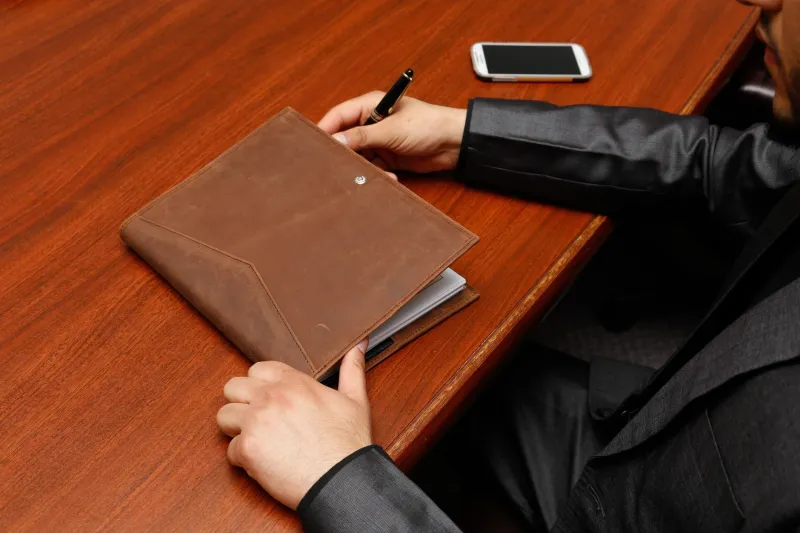
This one is simple but wildly effective. Before you enter any meeting that matters, take 90 seconds to jot down your key thoughts. Not a full outline — just a few words that anchor your ideas. Your phone's notes app works. A sticky note works. The back of your hand in a pinch works.
When you externalize a thought, you free up working memory to engage with the conversation without losing what you came in with. You've essentially parked your idea somewhere safe.
Create a Personal "Hold" Signal
When a new thought surfaces mid-meeting, you need a fast, low-friction way to capture it without derailing your attention. Some people use a shorthand symbol (a star, a circle) next to a blank line in their notes. Others use a dedicated "ideas" column in their meeting notebook.
The goal is to acknowledge the thought enough that your brain stops trying to hold it — because the more you try to mentally grip an idea, the harder it becomes to actually engage with what's happening in the room.
Protect the First Two Minutes
The opening of a meeting is when your mind is freshest and the social dynamics haven't fully kicked in yet. If you have something valuable to contribute, consider saying it early — before the room's energy consolidates around someone else's framing.
Leaders and facilitators who speak first often set the cognitive tone for the whole meeting. If that's not your role, that's fine — but you can still use those first two minutes to ground yourself by taking one slow breath and mentally reviewing what you wrote before walking in.
Debrief Yourself Immediately After
The five minutes right after a meeting ends are gold. Your brain is still warm from the conversation, and any ideas that got pushed aside during the session will often resurface if you give them a quiet moment.
Step away from your desk. Don't check Slack. Don't immediately start the next task. Just walk to the water cooler, sit in a stairwell, or stand outside for two minutes and let your mind wander back over what just happened. You'll be surprised what floats back up.
The Bigger Picture
We're not trying to make you the person who never engages in meetings, scribbling furiously in a notebook while everyone else is collaborating. That's not the move.
The move is to stop treating meetings as the primary venue for your best thinking. Use them for what they're actually good at — alignment, momentum, connection, accountability. But protect the thinking that happens before and after the room.
Your sharpest ideas aren't born in conference rooms. They're born in the quiet gaps — in the shower, on the walk to the car, in that weird half-awake moment before your alarm goes off. The conference room is just where they go to get socialized, refined, and (hopefully) acted on.
But only if they survive the door.
So next time you feel that pre-meeting spark, don't trust your brain to hold it. Write it down, protect it, and bring it with you. The clarity tax doesn't have to be as high as it's been.
You've got good ideas. Let's stop letting the calendar eat them.