Your Commute Is Smarter Than Your To-Do List
The Idea That Showed Up Uninvited
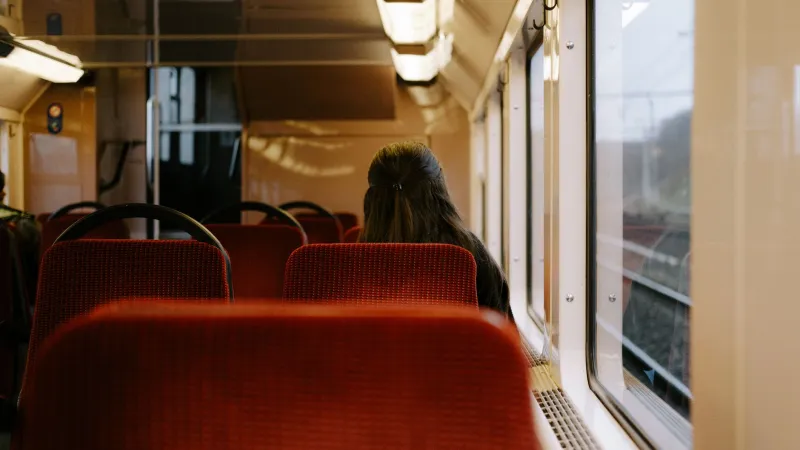
You're stuck in traffic on the 405. Or you're riding the L train through Chicago with your headphones in but nothing actually playing. You're not brainstorming. You're not even really thinking about work. And then — boom. The solution to that problem you've been wrestling with all week just lands in your head, fully formed, like it was waiting for you to look away.
Sound familiar? You're not imagining things, and you're definitely not lucky. What you're experiencing has a name, a mechanism, and a whole lot of neuroscience behind it. And once you understand what's actually happening in your brain during those in-between moments, you'll never waste a commute again.
What Your Brain Does When You're Not Watching It
Here's the thing about focused, intentional thinking: it's actually kind of limiting. When you sit down at your desk and try to solve a problem, your prefrontal cortex takes charge. It's methodical, logical, and great at executing known strategies. But it's also a bit of a control freak — it tends to block out the quieter, more associative signals coming from deeper parts of your brain.
Neuroscientists call the alternative the default mode network (DMN) — a set of brain regions that light up when you're not actively focused on a task. Think of it as your brain's background processing system. It's the thing humming away while you drive a familiar route, fold laundry, or zone out on the subway. And research consistently shows that the DMN is heavily involved in creative insight, self-reflection, and connecting seemingly unrelated ideas.
In other words, your best thinking happens in the gaps — not the grind.
The Rhythm Factor
Commuting, specifically, creates a particularly potent set of conditions for this kind of subconscious problem-solving. Here's why.
Repetitive physical movement — the steady rhythm of walking, the hum of a train, the muscle memory of a familiar drive — occupies just enough of your conscious attention to keep you from spiraling into stress or rumination. It's what researchers call low-stakes cognitive engagement. Your brain is technically busy, but not busy busy. There's just enough input to prevent full mind-wandering into anxiety territory, but not so much that the creative background processes get crowded out.
It's a Goldilocks zone for the brain. And most people spend it answering emails.
Why the Inbox Is Killing Your Commute
Let's be honest: the default move for most American professionals is to treat the commute as overflow time for productivity. Respond to Slack messages on the train. Listen to a work podcast in the car. Review the deck one more time before walking into the office.
And look — there's nothing inherently wrong with any of that. But when you do it every single commute, you're essentially cutting off the one reliable window your brain has to do its deep, associative work. You're filling the space before your subconscious gets a chance to speak up.
The irony is brutal: in an effort to be more productive, you're actually suppressing one of your most powerful cognitive tools.
How to Actually Use This
You don't need to stare blankly out the window for 45 minutes (though honestly, sometimes that's not the worst idea). Here are some practical ways to make your commute work for you, not just with you.
Give your brain a prompt before you disengage. Right before you start your commute, spend 60 seconds thinking about one specific problem you're working through. Don't try to solve it — just name it clearly in your head. Then let it go. You're essentially queuing it up for your default mode network to chew on while you drive or ride. By the time you arrive, you might be surprised what's waiting for you.
Protect at least half the commute from screens. This one's hard, especially on a long train ride when your phone is right there. But even 15 minutes of low-stimulation time — music without lyrics, a familiar podcast you're not really tracking, or just ambient noise — can be enough to let the DMN do its thing.
Keep a capture system handy. Ideas that surface during a commute are notoriously slippery. They feel obvious in the moment and then evaporate the second you walk into the office. Keep a simple notes app on your phone, a small notebook in your bag, or use voice memos while driving. The goal isn't to force ideas — it's to catch the ones that show up on their own.
Change the route occasionally. Novelty is a creativity trigger. A slightly different path to work introduces just enough new sensory input to nudge your brain out of autopilot and into a more exploratory mode. You don't need to discover a new neighborhood every morning — even a different street or a new coffee stop can shift the mental gear.
The Commute as a Ritual, Not a Chore
There's a bigger reframe happening here, too. Most of us treat the commute as dead time — the annoying gap between real life and real work. But what if you flipped that? What if the commute was the work, in a different form?
Some of the most consistently creative people — writers, designers, entrepreneurs — talk about protecting their transitional moments almost like sacred space. Not because they're doing anything special during them, but because they've learned that the brain needs unstructured time to synthesize everything it's been absorbing. The commute, the walk between meetings, the quiet drive home — these aren't interruptions to your thinking. They are your thinking, just operating at a frequency you can't consciously access from your desk.
WéeFocus exists on this idea: that the tiny, in-between moments aren't filler. They're often where the real clarity lives.
One Small Shift, Starting Tomorrow
You don't have to overhaul your morning. You don't need a new app or a different podcast or a productivity system. Just try this: tomorrow, for the first half of your commute, put the phone away. Give your brain a single problem to sit with, then let the rhythm of the road — or the rails, or the sidewalk — do what it's actually designed to do.
Your inbox will still be there. That breakthrough idea might not wait.